




How Resilient Lehigh Valley and United Way of the Greater Lehigh Valley’s Zero Youth Violence Mentor and Interruptors Program is Driving Impactful Change
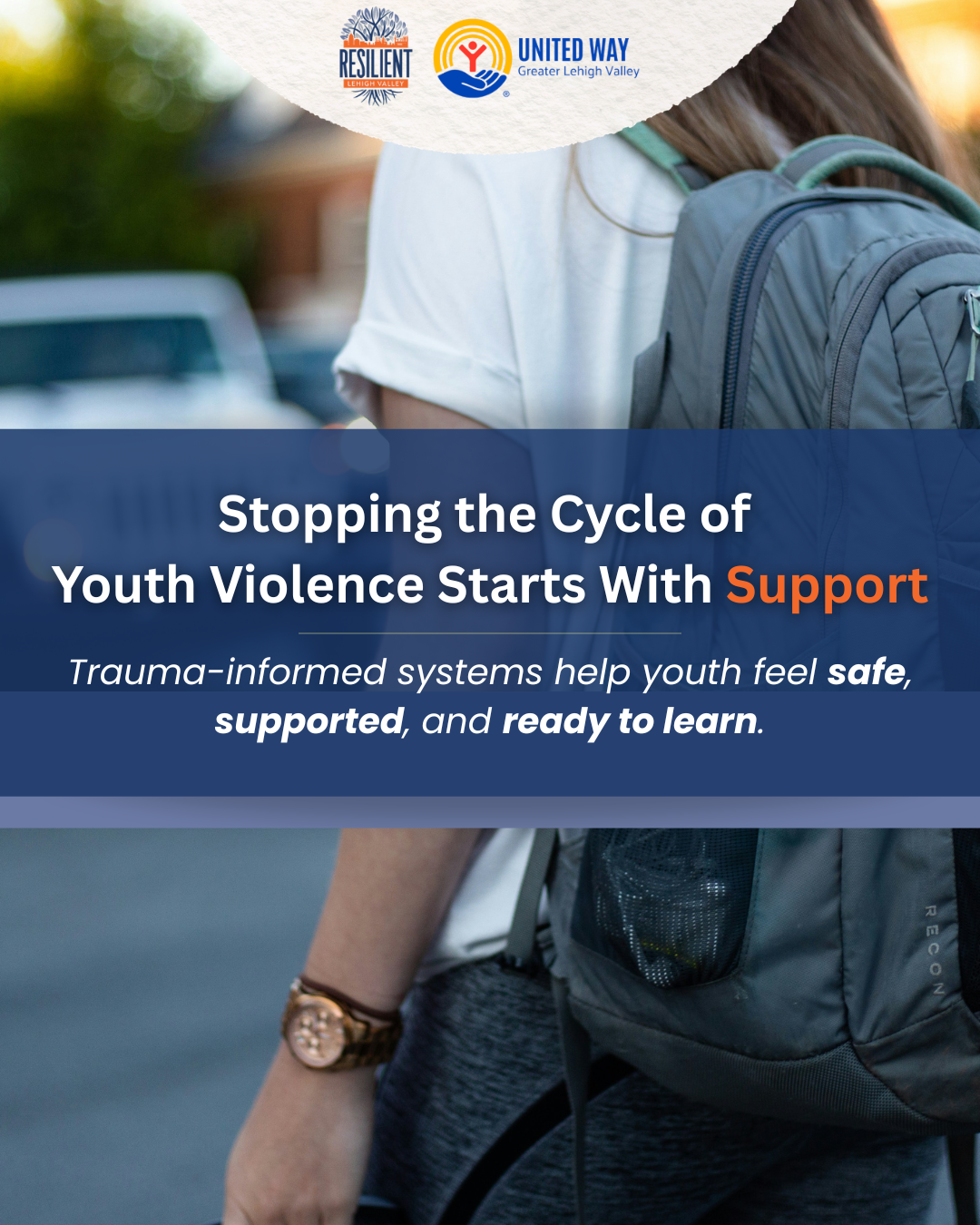
In the U.S., 60% of children have been exposed to some kind of violence, crime or abuse, beckoning action from community organizations to make a difference. Resilient Lehigh Valley, convened by United Way of the Greater Lehigh Valley (UWGLV), has answered the call by using funds awarded through the PCCD Grant (Pennsylvania Commission on Crime and Delinquency) to take vital, actionable steps to heal the Lehigh Valley from gun and gang violence.
At Francis D. Raub Middle School in the Allentown School District, many students face issues with gang-related trauma in and outside of school. When children feel the impacts of violence in their community, it deeply affects their ability to learn; they’re more concerned with survival than doing well in class. Using the funds from the PCCD Grant, Resilient Lehigh Valley implemented a Zero Youth Violence Mentor and Interruptors program, school-based behavioral health services, and designated safe walking routes to and from the school.
The PCCD Grant funds are breaking down barriers that prevent kids from focusing on their education, and are an essential tool for reducing crime and enhancing the quality of life for all Pennsylvanians. Resilient Lehigh Valley’s 29-month-long program: The Supporting Youth Exposed to Trauma and Cure Violence School-Based Pilot, gives them the ability to step in, show up and lay the foundation to stop the cycle of violence.
This pilot features a two-pronged approach:
- Reducing youth violence and suspensions in school
- Increasing youth resiliency by guiding schools through a trauma-informed approach
Investing the funds back into the community is life-saving work, as research shows that children exposed to adverse childhood experiences (ACEs), such as violence and crime, are more likely to exhibit negative behaviors at school and develop risky behaviors later in life.
After implementing safe walking pathways and behavioral health services in Raub Middle School, Resilient Lehigh Valley still has plans to do more. Currently, 50 people are being trained in trauma-informed care, with half focusing on trauma-informed schools and the remainder on trauma-informed health and human service agencies. The grant has also enabled UWGLV to partner with Shanthi Project to provide mindfulness support to students and to collaborate with St. Luke’s University Health Network to provide Raub with an after-school coordinator. UWGLV was also able to hire a full-time Grant Coordinator, a part-time Grant Financial Manager, two Zero Youth Violence Mentors and a full-time Behavioral Health Counselor.
Having staff dedicated solely to implementing the grant funding and trauma-informed initiatives is essential to the program’s success. Studies have shown that school communities that provide paid professional development, practice and support for all school employees foster a culture that builds resilience among all students.
The addition of mentors, counselors and programming is already making an impact: youth and families are building resilience through support from trauma-informed, healing-centered systems in the Allentown community. Vulnerable youth living in gang-involved areas now have a sense of safety and belonging in their school communities – not within a gang. Behavioral health services in Raub Middle School have been integrated and embraced, reaching more students and families with essential resources for success.
Resilient Lehigh Valley and UWGLV are cultivating a community where lives are changed through trauma-informed practices, education and compassion – one student at a time. To learn more about the impacts of Resilient Lehigh Valley and its mission, visit resilientlehighvalley.org.